Your health,
Our Priority
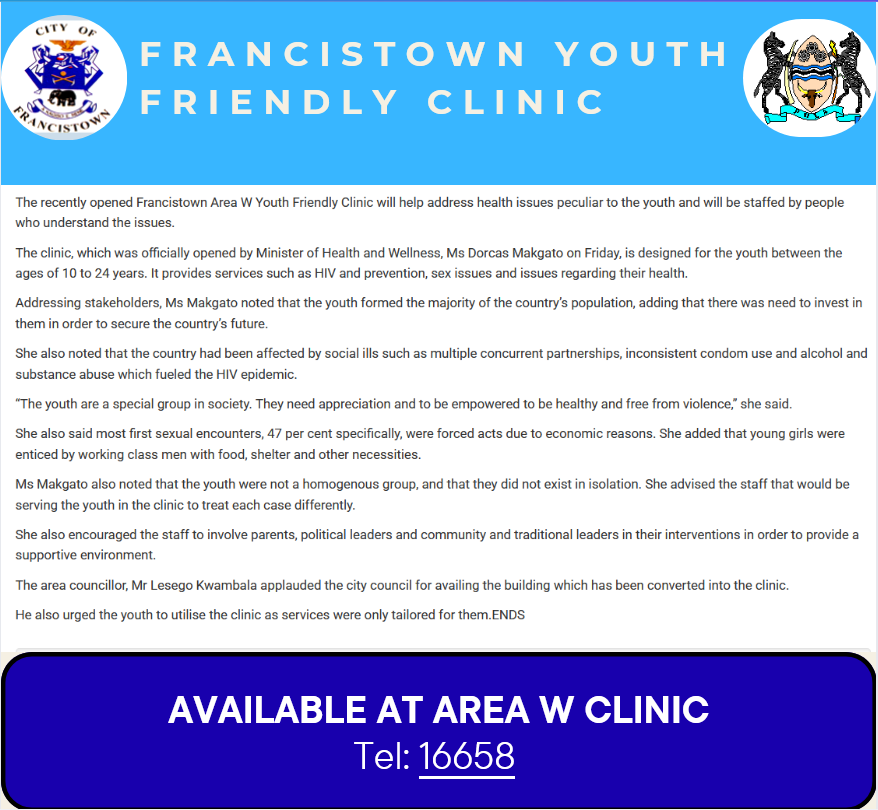
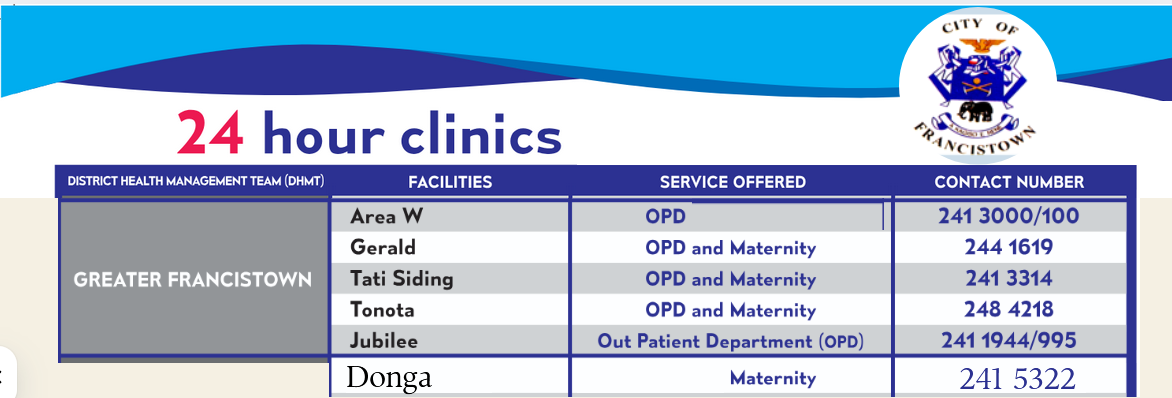
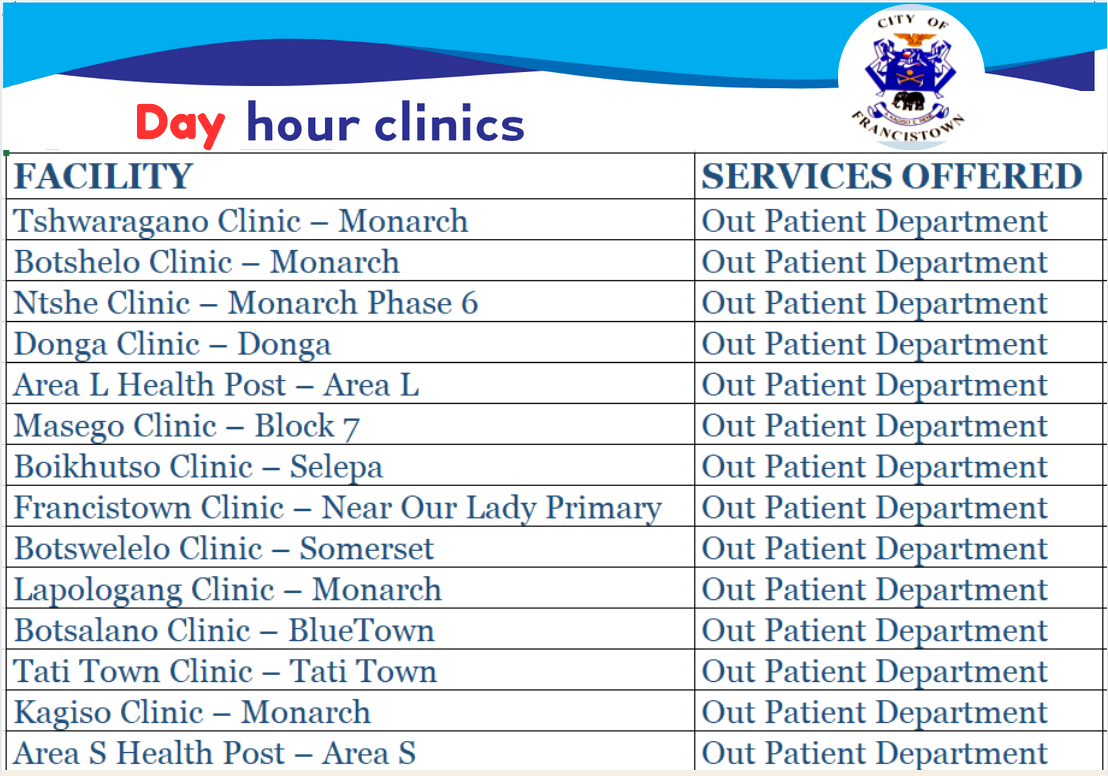
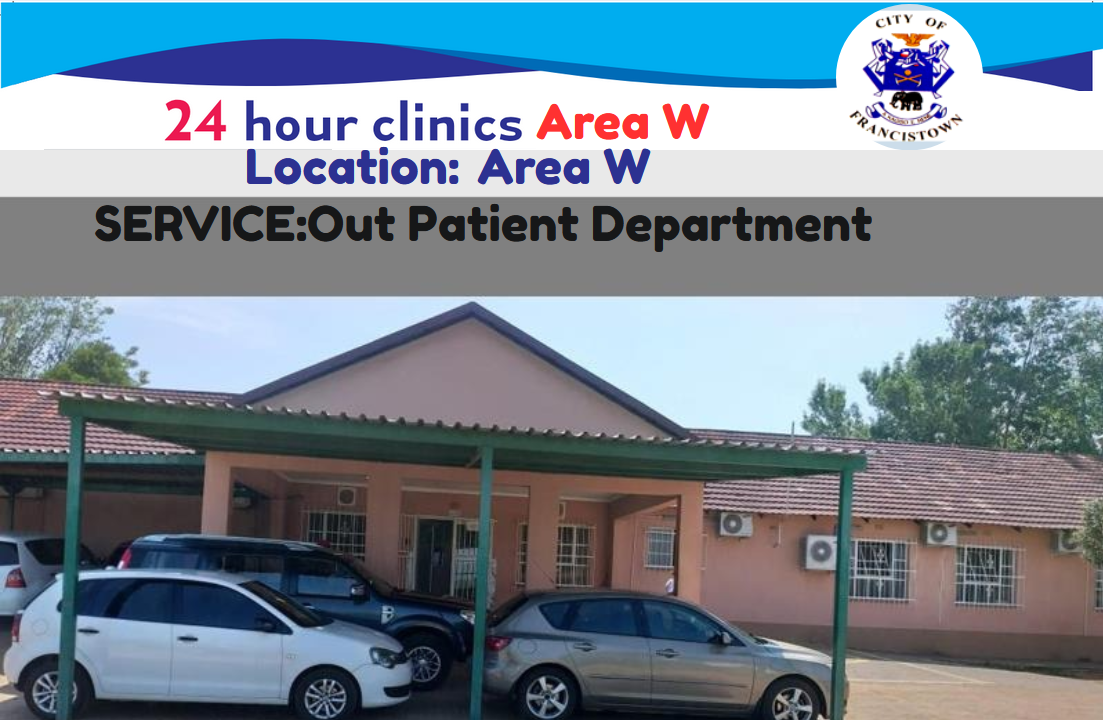
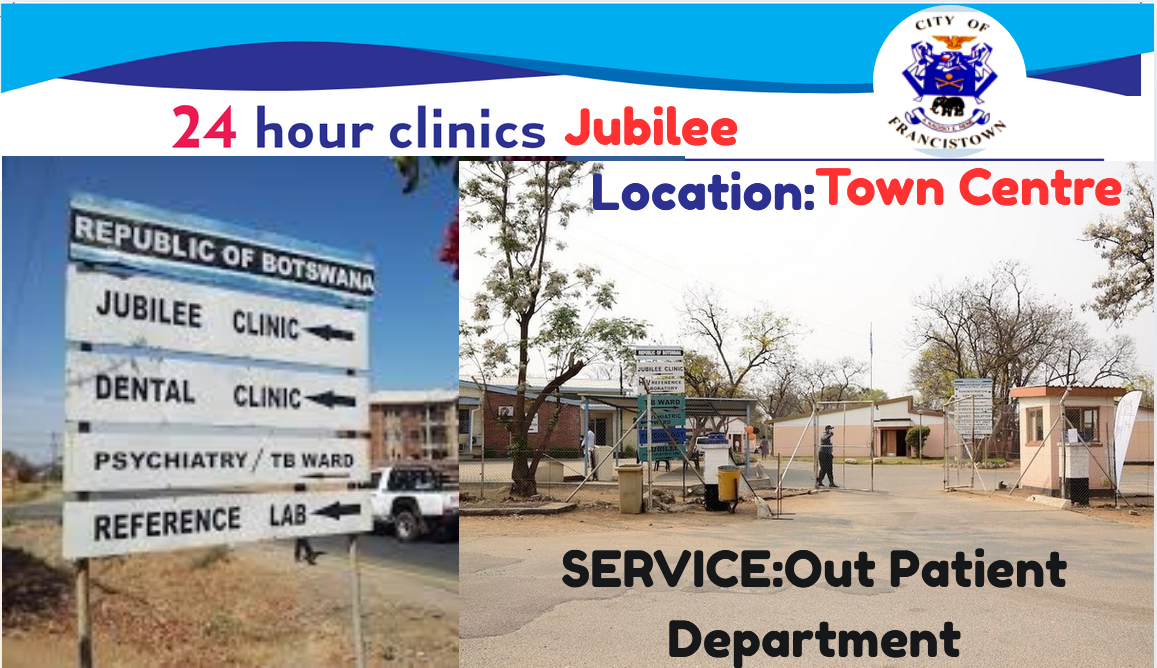
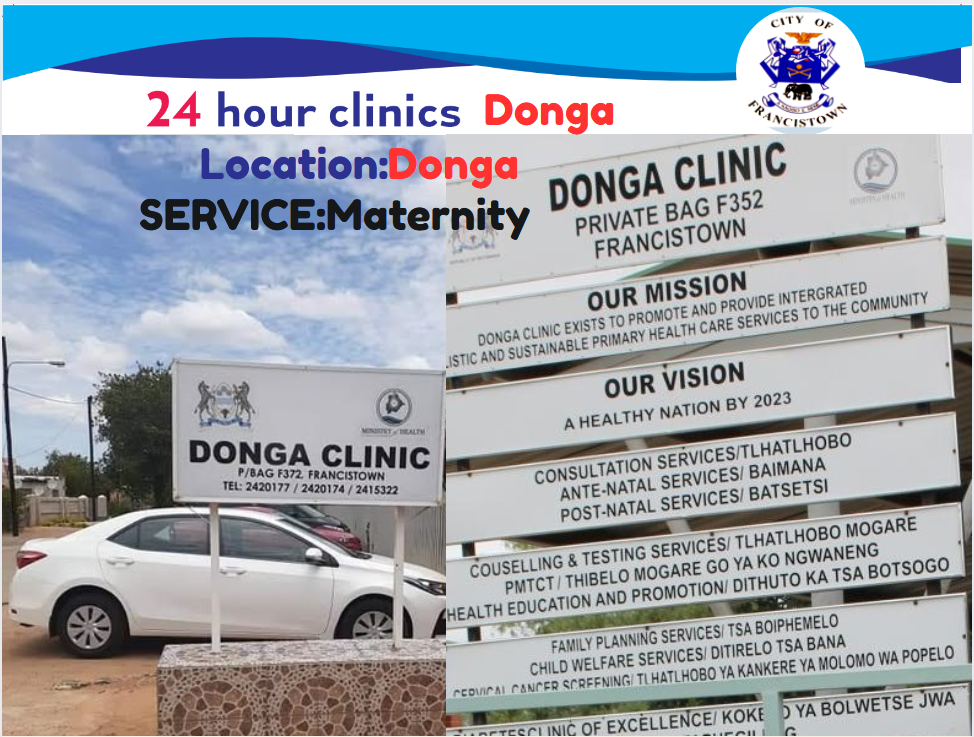
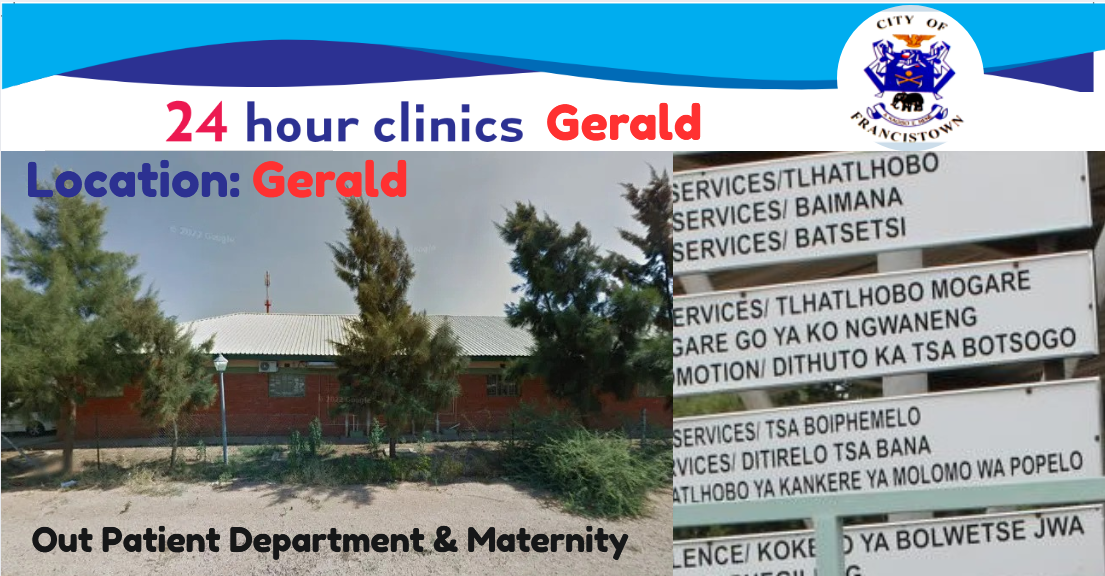
We provides health services to the public through Clinics and Health post facilities. There are 15 Clinics and 2 Health Posts within the City of Francistown. The following three Clinics operate 24hrs and these are Gerald Clinic, Area W Clinic and Jubilee Clinic.
goodbye!
Breast Cancer!
Breast cancer is cancer that starts in the breast cells, often in the ducts or lobules, and can manifest as a lump, swelling, skin changes, or nipple discharge. While most cases occur in older women, anyone can develop it. Risk factors include genetics, lifestyle choices, and not being physically active. Early detection through screening, such as mammograms, is crucial for better outcomes, and treatment can involve surgery, radiation, and medication.
- We are Available 24/7
- Family coverage
- We do testing
- We educate the Public
- Free follow-ups
- We chat, phone & video call
Healthcare partnerships


24 Hours Clinics, Out Patient & Maternity


Catch the Educational
Health topics on television
we’re here to Answer all your Health questions
“IT IS HEALTH THAT IS REAL WEALTH AND NOT PIECES OF GOLD AND SILVER”
Can I get PrEP at any Clinic ? PrEP, or pre-exposure prophylaxis, is medicine people at risk for HIV take to prevent getting HIV from sex or injection drug use
Most of Government Clinics offer it, ask your local Nurse. If they don’t have it, they will point you to one that does.
How can HIV be transmitted?
HIV is transmitted through penetrative (anal or vaginal) sex, blood transfusion, the sharing of contaminated needles in health-care settings and drug injection and between mother and infant during pregnancy, childbirth and breastfeeding.
Sexual transmission
HIV can be transmitted through penetrative sex. HIV is not transmitted very efficiently so the risk of infection through a single act of vaginal sex is low. Transmission through anal sex has been reported to be 10 times higher than by vaginal sex. A person with an untreated sexually transmitted infection, particularly involving ulcers or discharge, is, on average, six to 10 times more likely to pass on or acquire HIV during sex.
Oral sex is regarded as a low-risk sexual activity in terms of HIV transmission.
When a person living with HIV is taking effective antiretroviral therapy and has a suppressed viral load they are no longer infectious.
Transmission through sharing of needles and syringes
Re-using or sharing needles or syringes represents a highly efficient way of transmitting HIV. The risk of transmission can be lowered substantially among people who inject drugs by always using new needles and syringes that are disposable or by properly sterilizing reusable needles/syringes before reuse . Transmission in a health-care setting can be lowered by health-care workers adhering to universal precautions
Mother-to-child transmission
HIV can be transmitted to an infant during pregnancy, labour, delivery and breastfeeding. Generally, there is a 15–30% risk of transmission from mother to child before and during delivery. A number of factors influence the risk of infection, particularly the viral load of the mother at birth (the higher the load, the higher the risk). Transmission from mother to child after birth can also occur through breastfeeding.The chances of transmission of HIV to a child is very low if the mother is on antiretroviral therapy during pregnancy and when breastfeeding.
Transmission through blood transfusion
There is a high risk (greater than 90%) of acquiring HIV through transfusion of infected blood and blood products. However, the implementation of blood safety standards ensures the provision of safe, adequate and good-quality blood and blood products for all patients requiring transfusion. Blood safety includes screening of all donated blood for HIV and other blood-borne pathogens, as well as appropriate donor selection.
How can HIV infection be prevented?
Sexual transmission of HIV can be prevented by:
- Monogamous relations between uninfected partners.
- Non-penetrative sex.
- Consistent and correct use of male or female condoms
- Sex between two people when one of them is living with HIV but in taking antiretroviral therapy and has undetectable viral load
- Pre-exposure prophylaxis taken by people who are not infected with HIV.
- Voluntary Medical Male Circumcision reduces the chances of men acquiring HIV from women
Additional ways of avoiding infection:or opt for other prevention measures such as Optioid Substitution therapy.
- If you are an injecting drug user, always use new needles and syringes that are disposable or needles and syringes that have been properly sterilized before.